Highly Pathogenic Avian Influenza (HPAI), often called "bird flu", is a viral disease that primarily affects birds. Some strains can cause severe illness and death in wild birds, poultry, and certain mammals. The strain currently causing concern internationally is H5N1.
On the 15th of July 2026 HPAI was been confirmed in a bird in New Zealand. In consultation with the Department of Conservation and the Ministry for Primary Industries (MPI), Ōamaru Penguins is increasing its level of preparedness to help protect our little penguins and other local wildlife.
While there are currently no confirmed cases in Otago or within little penguins, we are taking precautionary steps to help protect our little penguin colony, local wildlife, our visitors and our staff.
What is changing?
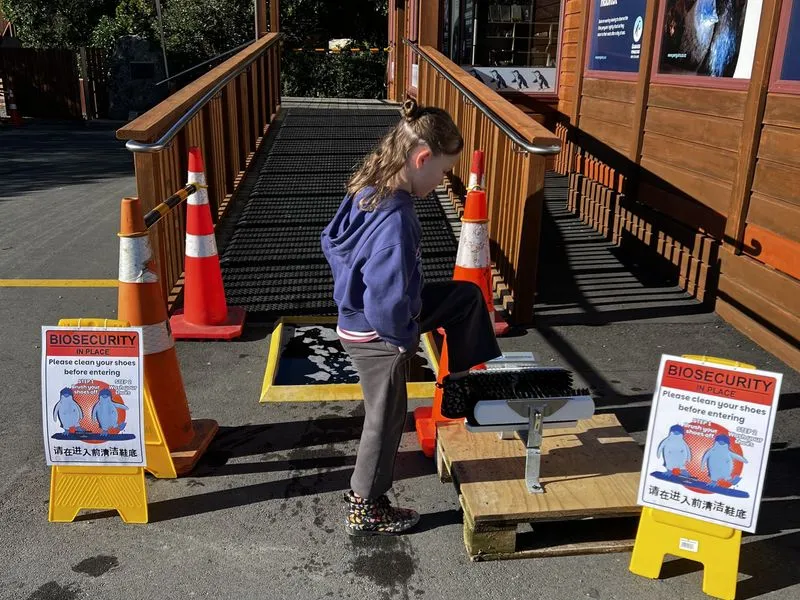
Visitors to the colony grounds will notice biosecurity measures around the colony, including footwash stations at the entrances to the penguin colony building and the seal viewing area.
We ask everyone visiting these areas to take a few moments to use the footbaths before entering. This simple measure helps reduce the risk of inadvertently transporting disease into sensitive wildlife habitat.
To assist with these new procedures, we also encourage visitors who are attending the Evening Viewing, to arrive 30-45 minutes before their scheduled tour time. All tours are continuing as normal.
There are currently no confirmed cases of HPAI in Otago or in little penguins, and all Ōamaru Penguins tours continue to operate as normal.
Our rehabilitation facility also remains fully operational, and we will continue responding to reports of sick or injured little penguins requiring assistance.
How can you help?
Everyone can play an important role in protecting our wildlife.
If you are visiting the colony or the seal viewing area, please:
Use the footwash stations provided.
Stay on designated boardwalks and pathways.
Avoid touching sick or dead wildlife.
Keep children and dogs well away from sick or dead animals.
Follow any instructions provided by staff.
Reporting sick or dead wildlife
The Ministry for Primary Industries (MPI) is asking the public to report three or more sick or dead birds or marine mammals (including seals) in the same location.
If you observe an event like this:
Do not handle the animals.
Note the location if it is safe to do so.
Contact the MPI Exotic Pest and Disease Hotline on 0800 80 99 66.
Prompt reporting helps authorities respond quickly and monitor the spread of the disease.
Is there a risk to people?
The risk of HPAI to the general public is currently considered to be very low.
As with any wildlife disease, people should avoid direct contact with sick or dead animals and follow advice from health and wildlife authorities.
We're here to help
We understand that news of HPAI may raise questions or concerns within our community.
Our team is happy to answer questions about HPAI, our little penguins and the biosecurity measures we have put in place. We are continuing to work closely with the Ministry for Primary Industries (MPI), the Department of Conservation (DOC) and our veterinary partners to monitor the situation and ensure we are prepared should circumstances change.
Protecting our little penguins and the remarkable wildlife that calls the Ōamaru coastline home is our highest priority. Thank you for supporting these precautionary measures and helping us safeguard this special place for future generations.