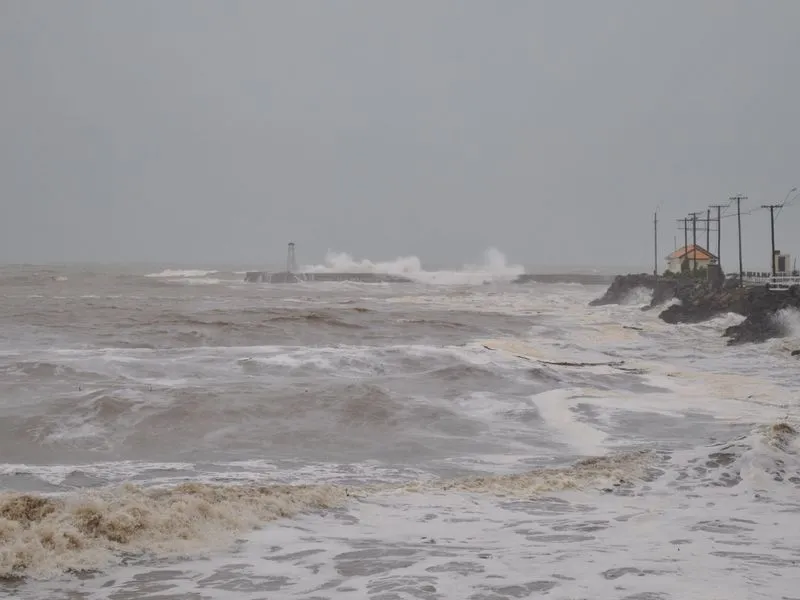
Storms are becoming more frequent and more intense as the climate rapidly continues to change. We see the impacts with growing regularity, and often with devastating effects on people and infrastructure. Land-based erosion is one of the most significant impacts of storms on the natural environment. Heavy rain strips sediment off the land, sending vast quantities of soil into the waterways. The Ministry for the Environment estimated that 192 million tonnes of soil enter New Zealand’s waterways every year, largely driven by land clearance and increasing storms.
While some of the sediment in waterways is trapped by hydro lakes or floodplains and estuaries, the majority ultimately reaches coastal waters where little penguins forage. After storms, we often observe dramatic changes in the ocean colour, with brown or aqua-blue water indicating large amounts of suspended sediment in the water column. Our research shows that the penguins typically forage within 30km of the North Otago coastline, mostly between Ōamaru and Timaru, and occasionally further north. We also know that the penguins are severely impacted by the effects of storms.
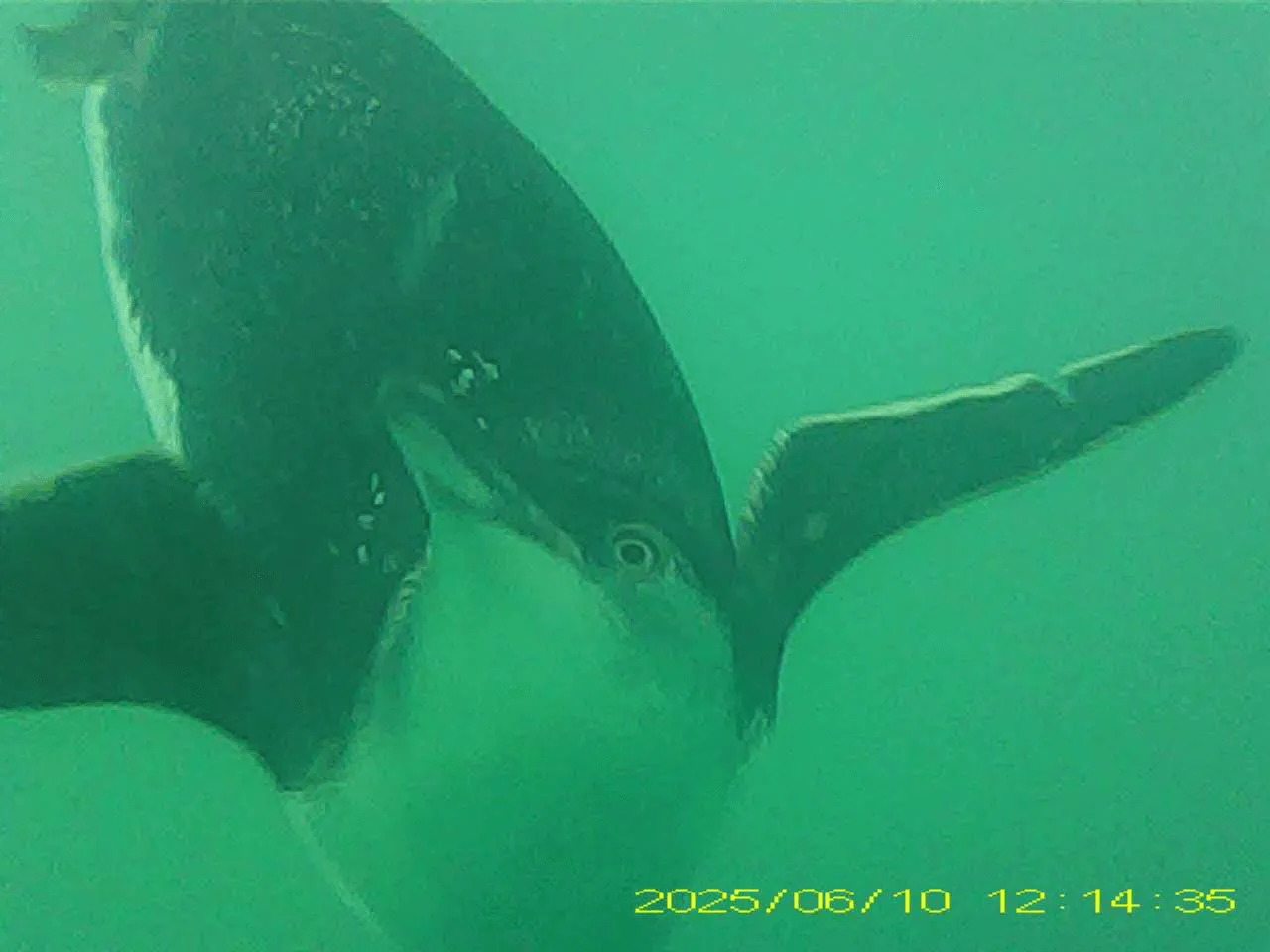
Decades of research at Ōamaru Penguins has established what the consequences of these conditions are: interruption to foraging trips, impacts on breeding success, lowered survival rates. What we don’t yet fully understand is the mechanisms driving the impacts. Are the penguins struggling to see their prey in the murky water? Or does sediment cause schools of fish they rely on to disperse and disappear altogether.
Answering these questions is the focus of the next part of our research. By utilising technology in the form of miniature video loggers attached to the penguins, we hope to see, from the penguins’ perspective, how changing coastal conditions are affecting their ability to survive. We can also take a deep dive (excuse the pun) into their foraging behaviour before, during and after a storm to further assess the impacts at sea.
Watch this space as we learn more!